

3H System
Eliminating Biofilm in 3 Stages — Diagnosis, Removal and Long-Term Protection
Intelligent water sanitisation technology that protects production, reduces chemical usage, and supports the achievement of ESG objectives.

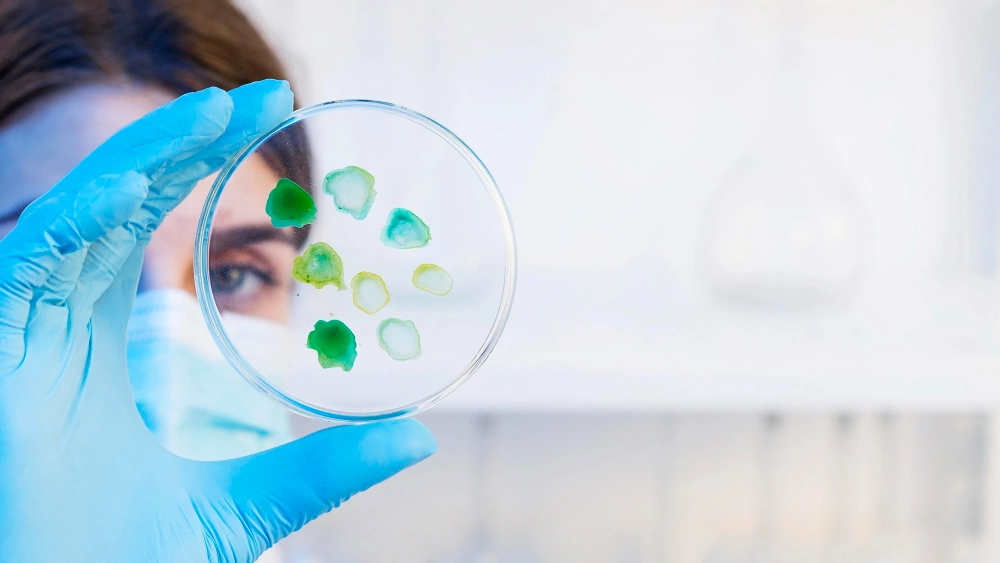
Why do traditional cleaning methods fail in the fight against biofilm?
A biofilm is a complex structure of microorganisms in which up to 90% forms a protective extracellular matrix.
Standard cleaning methods and chemicals only remove free-flowing bacteria in the system, leaving the source of contamination intact.
Secondary contamination Sudden contamination of the final product with bacteria.
Under-deposit corrosion Accelerated destruction of installations, especially stainless steel ones.
Flow resistance: Increased energy consumption and a drop in system performance.
Reputational risk Product recall and financial losses.
See how biofilm develops in installations
That’s why we developed the 3H System – an approach that eliminates biofilm at the source.
Why does the 3H System effectively eliminate biofilm where other methods fail?
Effective elimination of biofilm does not result from the application of a single chemical agent, but from a combination of appropriate diagnostics, technology, and process control.
System 3H combines these elements into a coherent, predictable solution tailored to the installation's operating conditions.
This is why System 3H is not a chemical – it's a complete technological solution for the permanent elimination of biofilm.
A comprehensive approach instead of a single measure: We don't act in a piecemeal fashion – we solve the problem at its source. The 3H system includes diagnosis, parameter selection, the biofilm removal process, and long-term system protection, ensuring the effect is not temporary.
The effectiveness of chlorine dioxide in biofilm structure: Chlorine dioxide (ClO₂) is one of the few substances capable of penetrating biofilm structures. This allows it to reach bacteria protected by the extracellular matrix and enables their effective removal – not just from the surface, but from the entire structure.
Precise fit for installation: Every installation requires a different approach. The 3H system is custom-designed to suit the flow rates, materials, temperature and specific characteristics of the process, ensuring maximum operational efficiency.
Control and stabilisation of effects Biofilm elimination is a process, not a one-off action. The 3H System includes monitoring of effectiveness and maintenance of operating parameters, which prevents the regrowth of biofilm.
CUSTOMERS
The 3H System in 3 steps
From installation audits, biofilm removal, to long-term system protection. We tailor each stage to the specific needs of the plant and process requirements.
1
Audit and diagnosis
We are analysing the installation, identifying biofilm, and selecting a strategy for effective sanitisation.
installation analysis
microbiological studies
biofilm assessment
Risk analysis
Action plan
2
Cleaning and deployment
We remove biofilm, restore microbiological safety and implement a solution tailored to the installation.
biofilm removal
disinfection
Sanitization
parameter selection
system startup
3
Protection and stabilization
We monitor the effects, maintain microbiological stability and ensure long-term system protection.
monitoring
research
Calibration
parameter monitoring
maintaining the effect
RESULT
Laboratory-confirmed results
The graph shows the moment the 3H System was started. After 48 hours, the number of microorganisms in circulation drops below the detection limit, and microbiological stability is maintained at a constant level throughout the entire production cycle.
Microbiological examination of water in the drinking system
Comparison of results before and after the implementation of ProOxine® technology — pig farming, closed cycle
Before implementation: Downloaded 16.01.2026, result 25.01.2026 (Ref. 130/2026/B)
Upon deployment: Downloaded 04.02.2026, result 11.02.2026 (Ref. 285/2026/B)
Parameter
Before deployment
After the implementation of ProOxine®
Parameter
Coliform bacteria
jtk / 100 ml
Over 300
0
↓↓ elimination
Escherichia coli
jtk / 100 ml
21
0
↓↓ elimination
Faecal enterococci
jtk / 100 ml
49
0
↓↓ elimination
Coagulase-positive staphylococci
jtk / 100 ml
0
0
✓ no change
jtk / 1 ml
Over 300
6
↓↓ >98%
jtk / 1 ml
Over 300
2
↓↓ >99%
Salmonella spp.
Presence
Not found
Not found
✓
Raw water samples taken from the drinking system before the ProOxine® dosing was activated and after the implementation period.
EHT Poland • ProOxine® Technology • Water hygiene in animal production
Microbiological parameters of water in the drinking system
Comparison of results before and after the implementation of ProOxine® technology — pig farming, fattening
Before implementation: Installation stand without ClO₂ sanitisation
Upon deployment: Constant ProOxine® dosing
Parameter
Before deployment
After the implementation of ProOxine®
Parameter
Coliform bacteria
jtk / 100 ml
200
0
↓↓ elimination
Escherichia coli
jtk / 100 ml
35
0
↓↓ elimination
Faecal enterococci
jtk / 100 ml
4
0
↓↓ elimination
Coagulase-positive staphylococci
jtk / 100 ml
0
0
✓ no change
jtk / 1 ml
Over 300
Under 20
↓↓ >93%
jtk / 1 ml
Over 300
Less than 10
↓↓ >96%
Salmonella spp.
Presence
Risk of presence
Not found
Elimination
Raw water samples taken from the drinking system before the ProOxine® dosing was activated and after the implementation period.
EHT Poland • ProOxine® Technology • Water hygiene in animal production
-30%
rinse water usage
-50%
spending on intervention chemistry
100%
reproducibility of microbiological test results
Efficiency in practice
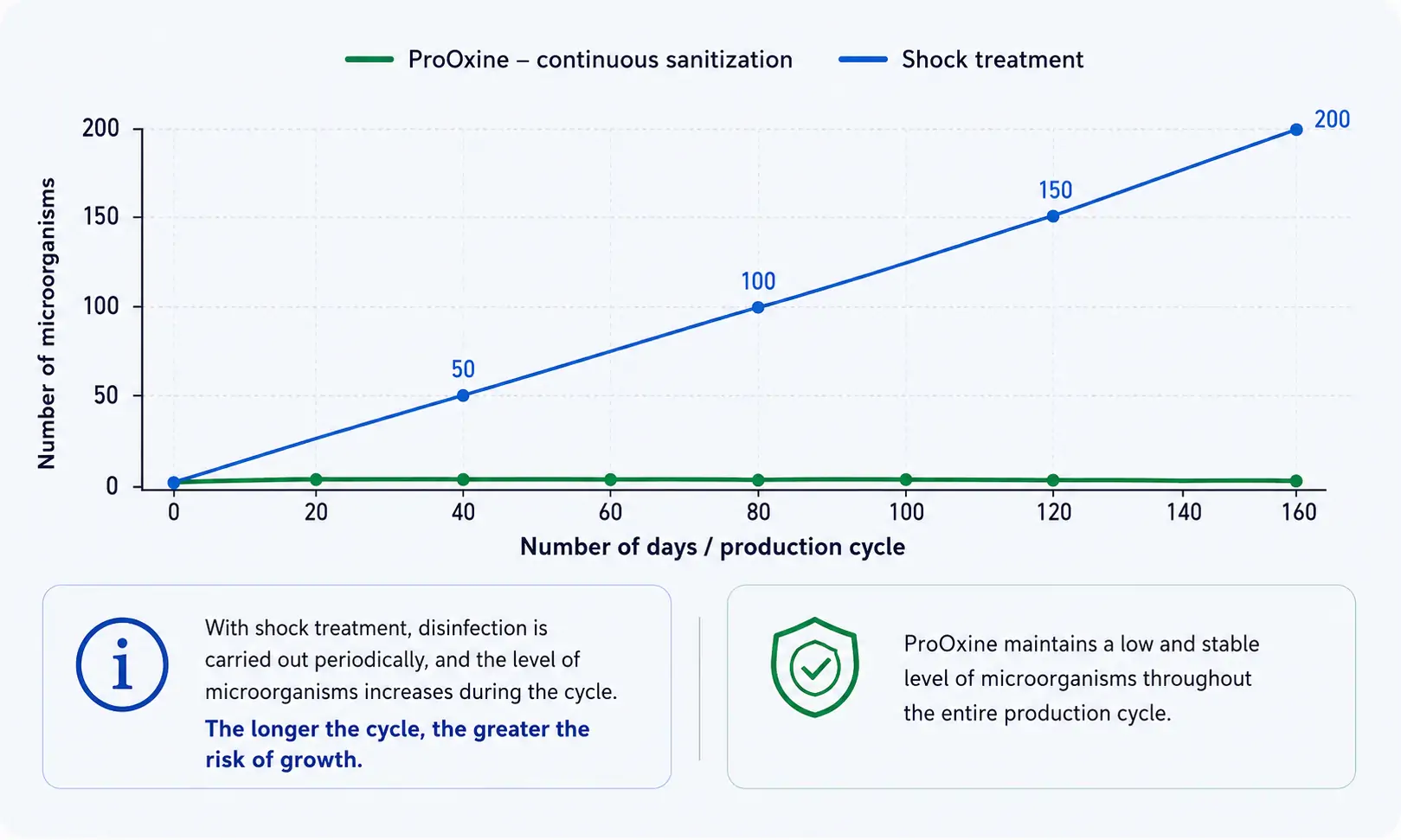
Ongoing sanitisation vs. shock measures
Automatic activation systems
The effectiveness of chlorine dioxide does not depend solely on the quality of the preparation. The way it is activated and precisely dosed is also of key importance.
The System 3H uses automatic activation systems, developed by a team of experienced engineers, which eliminate the need for manual preparation of the working solution and guarantee user safety, process repeatability, and the maintenance of a stable ClO₂ concentration, ensuring effective microbiological control of the installation throughout its service life.
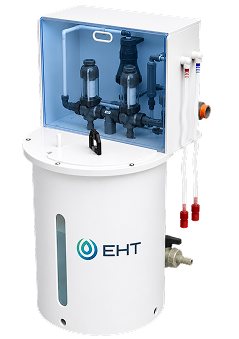

AANE™
Without mains power
An automatic activation system that automatically prepares and refills the tank with working solution exactly when it is needed.
Ideal for small and medium-sized installations requiring a simple and reliable solution.
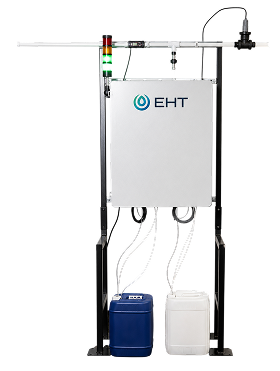
EDIE™
Smart dosing
Electric activation system with a dual dosing system, utilising intelligent control for automatic preparation and precise dosing of chlorine dioxide solution.
It ensures high accuracy and stability of process parameters.
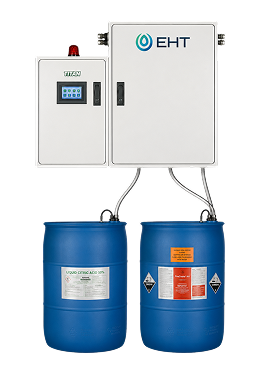
TITAN™
Maximum efficiency
An advanced PLC-controlled system, designed for large-scale installations with high chlorine dioxide requirements.
It enables the automatic preparation of a solution and maintains the set concentration even at very high flow rates.
From simple installations to the largest industrial plants - we select an activation and dosing system perfectly tailored to the needs of your facility.
AANE™
EDIE™
TITAN™
Small and medium-sized installations
Medium and large installations
Large-scale industrial installations
Without mains power
Smart dosing
PLC control
Automatic activation
Precise process control
Peak performance
Easy to use
Integration with automation systems
Work 24/7
At EHT, we do more than just supply products and equipment.
We design complete microbiological safety systems, combining specialist knowledge, proven technologies and intelligent automation.
CUSTOMERS
They placed their trust in us














Feedback
Customer testimonials
We have earned the trust of customers for whom hygiene, safety and process efficiency are of paramount importance.
We assess our cooperation with EHT Poland as professional, well-organised, and based on measurable parameters. The company provides real technical support and consistently demonstrates the results achieved on the farm.
Farm, Rafał Gawlica
(...) the greatest benefit was the improved control over water hygiene and the practical technical support. The solution was implemented under real production conditions, taking into account the specific characteristics of the farm and the production cycle. (...)
Agnieszka and Przemysław Firgan Farm
In our assessment, the cooperation has been conducted with integrity and competence, and continuous technical supervision has allowed for the stabilisation of the water system's operation and an improvement in production safety.
PANKOWSCY Sp. z o.o.
(...) We recommend EUROPEAN HYGIENE TECH POLAND Sp. z o.o. as a reliable and effective partner in the field of water hygiene, the disinfection of water systems and measures to mitigate microbiological risks in public facilities. (...)
ABOUT US
Over 15 years’ experience
in biosafety
15+
experience in international markets.
implementations carried out in industrial systems.
countries served
(Poland, Scandinavia, the Baltic States, Western Europe).
QUALIFICATIONS
Quality confirmed by tests and certificates
Certificates

OMRI Listed®
Organic Materials Review Institute

Health Certificate
National Institute of Public Health (PZH)
– State Research Institute

ISO 9001:2015
The Certification Body of TÜV SÜD America Inc.
Tests carried out according to standards:
Stay up to date
Knowledge base
FAQ
You most often ask
What is the 3H® system?
System 3H® is a comprehensive solution for maintaining the microbiological safety of water. It combines diagnostics, system sanitisation, active ClO₂ preparation, dosing, monitoring, and results reporting. The objective is to maintain a specific water quality standard, not merely to supply a chemical agent.
What is ProOxine?
ProOxine is a preparation based on sodium chlorite, used to prepare active chlorine dioxide. It is one of the components of the 3H® system. Thanks to on-site activation, it is possible to obtain a fresh and effective ClO₂ solution.
How does the 3H® system work?
The system prepares active ClO₂, doses it into the water installation, and supports the maintenance of appropriate microbiological parameters. The operation is based on continuous monitoring and regular effectiveness assessment. This allows the user to have control over water quality throughout the entire production cycle.
How is active ClO₂ produced?
Active chlorine dioxide is produced in an activation device through the reaction of ProOxine with a citric acid-based activator. The process is carried out under controlled conditions, resulting in a solution with a predictable concentration. The solution is then dosed into the system.
Why is ClO₂ prepared on-site?
Preparation on-site limits loss of activity and ensures high efficacy of the agent. Users do not need to store large quantities of the ready solution. The solution increases safety and improves process repeatability.
How does Dosatron work?
The Dosatron uses water flow to proportionally dose a substance. It does not require an electrical power supply and automatically adjusts the dosage to the current flow. This allows for a stable concentration of the substance to be maintained throughout the installation.
Does ClO₂ remove biofilm?
Yes. Chlorine dioxide is recognised as one of the most effective technologies for biofilm reduction. It can penetrate its structure and reduce sites for microbial growth.
What is a biofilm?
Biofilm is a layer of microorganisms, organic matter, and metabolic products that deposits on installation surfaces. It forms a reservoir for bacteria and other pathogens. It can cause secondary contamination of water even when the quality of the water at the inlet is good.
Why is biofilm a problem?
Biofilm protects microorganisms from the action of many disinfectants. It hinders the maintenance of microbiological water quality and can limit the effectiveness of medicines administered through the system. It is one of the most common causes of chronic quality problems.
Does ClO₂ work on bacteria?
Yes. Laboratory studies and operational practice confirm high efficacy against many bacterial species relevant to animal production and water safety.
Does ClO₂ work on viruses?
Yes. Efficacy against numerous viruses has been confirmed, including H5N1, adenoviruses, and noroviruses. This allows the technology to support biosecurity programmes.
Has effectiveness against H5N1 been confirmed?
Yes. In tests carried out in accordance with the PN-EN 17122 standard, a reduction of more than 6 log was achieved. This means that over 99.9999% of the tested virus population was eliminated.
What does reduction of >6 logs mean?
This represents a very high level of disinfection efficacy. In practice, it means the removal of more than 99.9999% of the microorganisms present in the test sample.
Does ClO₂ work on Legionella?
Yes. Chlorine dioxide is commonly used to control Legionella. Its ability to act within biofilms and in extensive systems is particularly significant.
Does ClO₂ react with organic matter?
Yes, but selectively. It reacts primarily with specific chemical groups present in microorganisms and biofilm. This allows it to disinfect effectively without causing the classic chlorination characteristic of chlorine.
Does ClO₂ react with proteins?
Yes. It oxidises selected amino acids and enzymes essential for the functioning of microorganisms. This is one of the main mechanisms of its biocidal action.
Does ClO₂ react with fats?
It can react with some fats, but much less so than ozone or free chlorine. This means that a larger proportion of the active agent can be used to combat microorganisms.
Can microorganisms become resistant?
No classical resistance mechanisms characteristic of other disinfectants are observed. This is due to the different mechanism of action of ClO₂.
What is ORP?
ORP is an indicator of the oxidation-reduction potential of water. It informs about the general chemical condition of the environment and can support the assessment of the effectiveness of a sanitisation process.
Does the ORP measure ClO₂?
No. ORP is not a direct measure of chlorine dioxide concentration. It should be interpreted alongside measurements of active ClO₂ and other parameters.
Why does water affect production outcomes?
Water is the most important nutrient for animals. Its quality affects the health of the digestive tract, feed intake and production results.
Does water quality affect FCR?
Yes. Microbiological problems can worsen feed utilisation and increase production costs. Therefore, water quality is one of the elements that affects the efficiency of farming.
What is the 3H® Water Standard?
A water quality management programme covering diagnostics, implementation, monitoring and reporting. Its aim is to maintain a defined microbiological safety standard.
Why isn't 3H a water treatment product?
Because the customer is buying the outcome of water quality and process control. Chemistry is just one part of the entire system.
What does the implementation look like?
It begins with a water audit and testing. Then, sanitation measures and monitoring are implemented. Effectiveness is confirmed by further testing.
Why are the new regulations important?
New regulations require risk management across the entire water system. Requirements for monitoring, documentation, and control of microbiological hazards are increasing.
Is water hygiene a cost or an investment?
This is an investment in production stability. The costs of the programme are usually small compared to the potential losses resulting from health and production problems.
Can ROI be calculated?
Yes. The analysis can include FCR, drug consumption, falls, and other economic parameters specific to the farm.